


From simple dressing to multifunctional device: the evolution of wound care materials

Updated: Oct 1
For several decades, wound dressings have no longer been limited to simply covering wounds. Their gradual evolution has been accompanied by the integration of increasingly targeted functions, adapted to the diversity of clinical needs encountered in wound care.
The development of increasingly advanced functions
First, the development of families of dressings such as hydrocolloids, hydrofibers, alginates, and antimicrobial devices has progressively broadened the traditional role of dressings. Initially intended to protect the wound and absorb fluids, these advanced care devices have, over time, incorporated more targeted functions, such as maintaining a moist environment favorable to healing, advanced exudate management, and local microbiological control. This evolution has helped further adapt these devices to wound characteristics and the associated clinical needs.
This diversification of functions has been accompanied by the development of new approaches to the design of medical devices. Porous and textile materials, widely used in dressings, now serve as platforms capable of integrating different functionalities depending on the nature of the materials and associated active agents.
Functional powders: a way to impart targeted properties to wound dressings
To integrate these functions into dressings, medical device manufacturers have notably relied on the development of functionalizing powders. For instance, many antimicrobial agents exist in powder form, including silver, zinc, copper, and many others. These antimicrobial powders help limit certain local microbial proliferations, particularly bacterial growth, and thus contribute to the functions sought in certain wound care devices.
The addition of superabsorbent polymers such as sodium polyacrylate enables exudate management thanks to their high water-retention capacity. Depending on their nature and quantity, these materials can absorb several times their own weight in fluid.

Certain powders can also help create an environment conducive to healing. It is notably the case of compounds made of hyaluronic acid, used in some devices for their hydrating properties and their role in natural mechanisms of tissue repair. This is notably the case for hyaluronic acid-based compounds, used in certain wound care devices for their hydrating properties and their role in natural tissue repair mechanisms.
In addition to addressing clinical needs, the functionalization of dressings also improves patient comfort. The impregnation of activated carbon or zeolite allows to absorb some odor-causing compounds, thereby limiting emissions associated with some chronic wounds. This issue goes beyond immediate comfort alone. In some of these wounds, odors can impair quality of life, lead to social isolation, and complicate the patient’s overall care. Furthermore, it is possible to add perfuming or neutralizing compounds to these medical devices.
Powder integration, a design challenge
These functionalizing powders can be incorporated in a variety of porous structures, such as open-cell polyurethane foams, nonwovens made from synthetic, artificial, or natural fibers, or collagen or gelatin matrices. These porous substrates can host different functional active agents while, depending on the processes used, preserving important material properties such as absorption, breathability, or mechanical performance.
At the same time, the choice of integration techniques is of considerable importance: it must preserve the clinical and mechanical properties of the dressing and of the agents it contains. Companies in this sector also tend to turn to innovative technologies that support differentiation and the creation of intellectual property, given the substantial financial efforts and investments required to develop and launch a new product.
The current trend: increasingly multifunctional care devices
The needs associated with a wound are typically not limited to a single parameter. Wounds often present several challenges simultaneously. Mechanical protection remains essential, but it is frequently accompanied by several other needs. For instance, a chronic wound may involve bacterial load, odors, and significant exudate. Similarly, an exudative wound, whether chronic or acute, requires absorption, maintenance of moisture balance, and limitation of maceration.
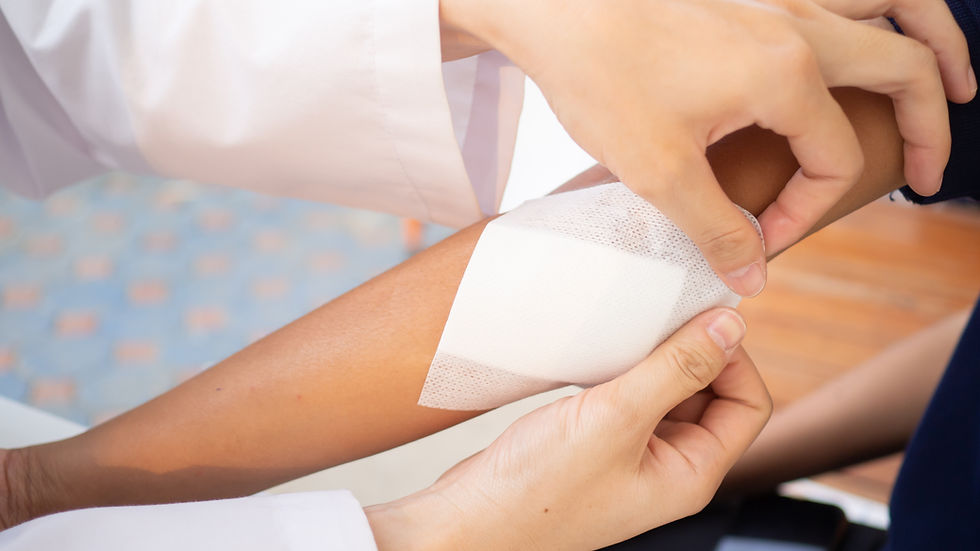
This growing combination of functions is also described in the scientific literature on wound care devices. For example, it has led to the development of dressings combining absorbent agents with antimicrobials in order to manage fluids and limit certain local bacterial proliferation. There are also dressings that combine activated carbon with adsorbent materials to improve comfort and facilitate wound management.
Final word
The modern dressing no longer relies solely on a single isolated function, but on the rational combination of several properties adapted to the targeted clinical needs. This multifunctional approach illustrates the gradual evolution of wound care devices toward materials capable of adapting to the diversity of situations encountered in wound management.
This article was edited and published by Sylvain Batut.


Comments